What Are the Early Warning Signs of Bearing Failure?
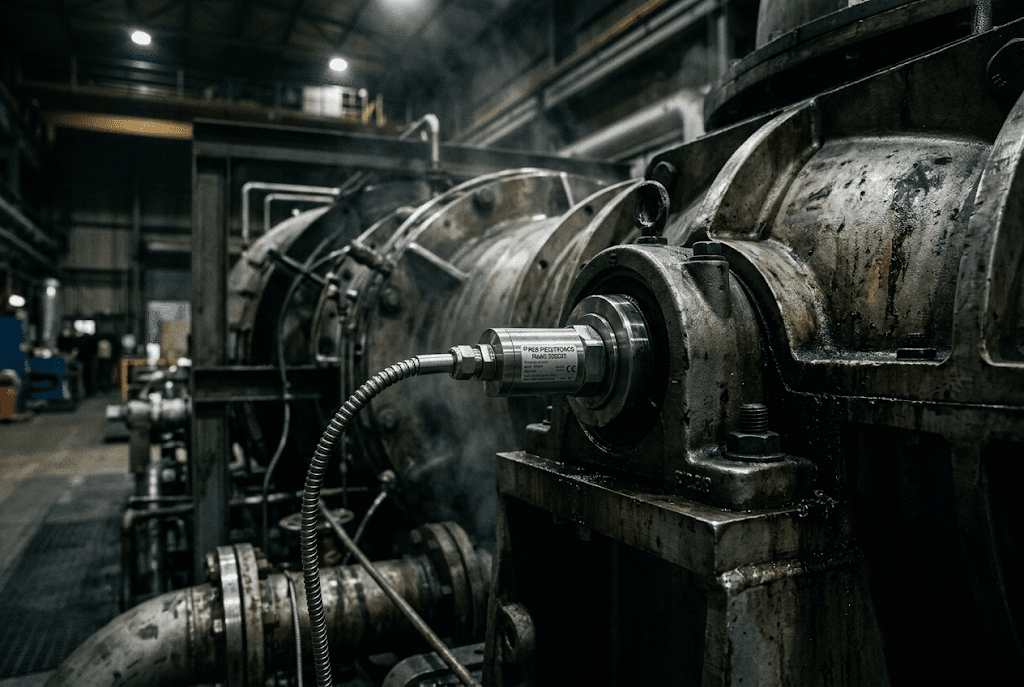
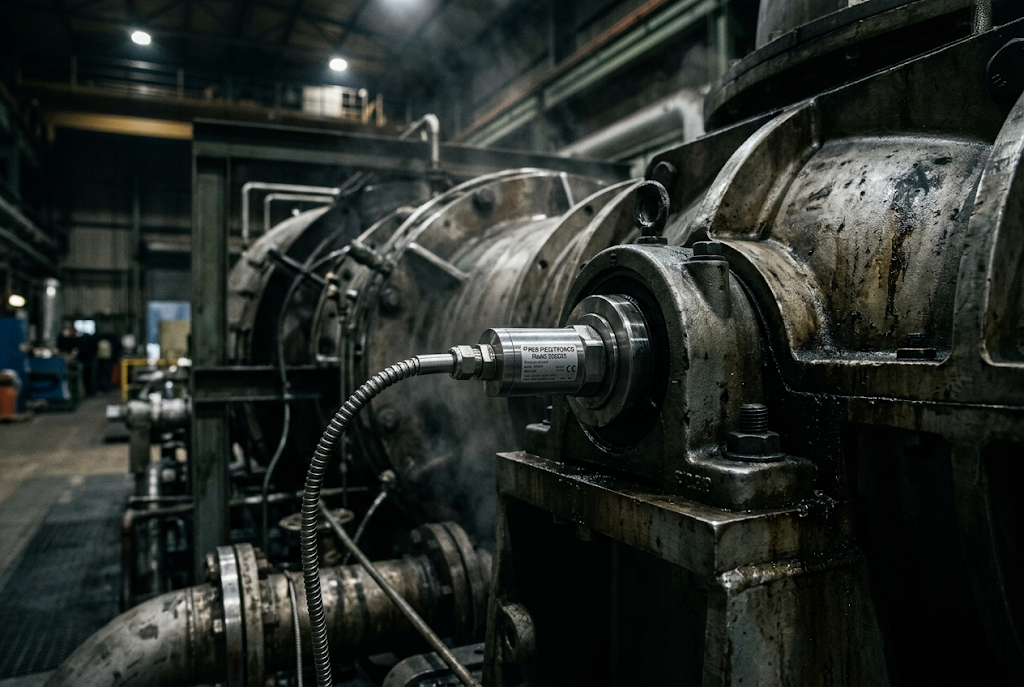
Bearing failure follows a predictable pattern called the P-F curve. Vibration analysis detects the earliest signs 6-8 weeks before functional failure — long enough to plan a replacement during scheduled downtime instead of an emergency shutdown. The five warning signs, in order of severity: abnormal vibration spectra, elevated temperature, unusual noise, lubrication degradation, and visible damage.
Bearings account for 43% of all electric motor failures in industrial applications (IEEE Motor Reliability Study). In Ontario manufacturing, a single bearing failure on a critical production line costs $80,000-$250,000 in lost output and emergency repairs.
Talk to our vibration analysts if you suspect a bearing problem in your plant.
Warning Sign 1: Abnormal Vibration Spectra
This is the earliest detectable sign — appearing 6-8 weeks before failure. A vibration analyst identifies bearing defect frequencies in the spectrum: BPFO (outer race), BPFI (inner race), BSF (ball spin), and FTF (cage). These frequencies are mathematically predictable based on bearing geometry.
At this stage, the bearing looks and sounds normal to operators. Only instrumented vibration analysis catches it.
What to do: Schedule a replacement during your next planned shutdown. You have weeks, not days.
Warning Sign 2: Elevated Temperature
Appears 3-4 weeks before failure. Infrared thermography reveals a temperature rise of 10-15°C above baseline on the bearing housing. Causes include micro-pitting on the raceways, lubricant breakdown, and increased friction.
What to do: Confirm with vibration data. If both indicators align, prioritise this bearing for replacement within 2 weeks.
Warning Sign 3: Audible Noise
Appears 1-2 weeks before failure. Grinding, squealing, or clicking becomes audible without instruments. By this point, damage is advanced — metal-to-metal contact is occurring.
What to do: This is urgent. Plan an immediate replacement. Running the machine beyond this point risks catastrophic failure with secondary damage to shafts, housings, and seals.
Warning Sign 4: Lubrication Degradation
Oil analysis reveals metal particles (iron, chromium) in lubricant samples. Particle counts exceeding ISO 4406 cleanliness codes for the application confirm wear is accelerating.
What to do: Change lubricant immediately and schedule bearing replacement. The contaminated oil is accelerating damage.
Warning Sign 5: Visible Damage
Spalling, pitting, or discolouration visible during inspection. At this stage, failure is imminent — hours to days.
What to do: Shut down immediately. The risk of catastrophic failure (broken cage, seized bearing, shaft damage) is real and could cause secondary damage costing 5-10x the bearing replacement.
The P-F Curve: Your Decision Window
The P-F interval for vibration-detectable bearing faults is 4-8 weeks. This window gives Ontario plant managers time to:
- Order parts without expediting fees (saves 40-60% on parts cost)
- Schedule the repair during planned downtime (zero lost production)
- Assign qualified trades instead of whoever is available at 2 AM
- Prevent secondary damage to shafts, housings, and coupled equipment
Plants without vibration monitoring only discover the problem at Warning Sign 3 or 4 — leaving days, not weeks, to react.
Get your critical assets on a vibration monitoring programme. Our analysts have diagnosed bearing faults in Ontario plants for 20+ years.
Frequently Asked Questions
How much does a single bearing failure cost an Ontario plant?
Direct costs (bearing, labour, parts) typically run $2,000-$8,000. Indirect costs (lost production, quality rejects, overtime, expedited shipping) push the true cost to $80,000-$250,000 for a critical production asset. The ratio of indirect to direct costs is typically 10:1.
Can I detect bearing failure without vibration analysis?
Thermal imaging catches temperature rise 3-4 weeks before failure. Ultrasonic detection catches high-frequency noise slightly earlier. But vibration analysis provides the earliest and most specific detection — identifying which bearing component is failing and how fast.
How often should bearings be checked with vibration analysis?
Monthly vibration data collection on critical rotating assets is the industry standard for route-based programmes. Continuously monitored assets (online sensors) provide real-time detection.
Droz Technologies has been diagnosing bearing failures across Ontario since 2004. Talk to a vibration analyst about protecting your critical assets.
Ready to apply this?